
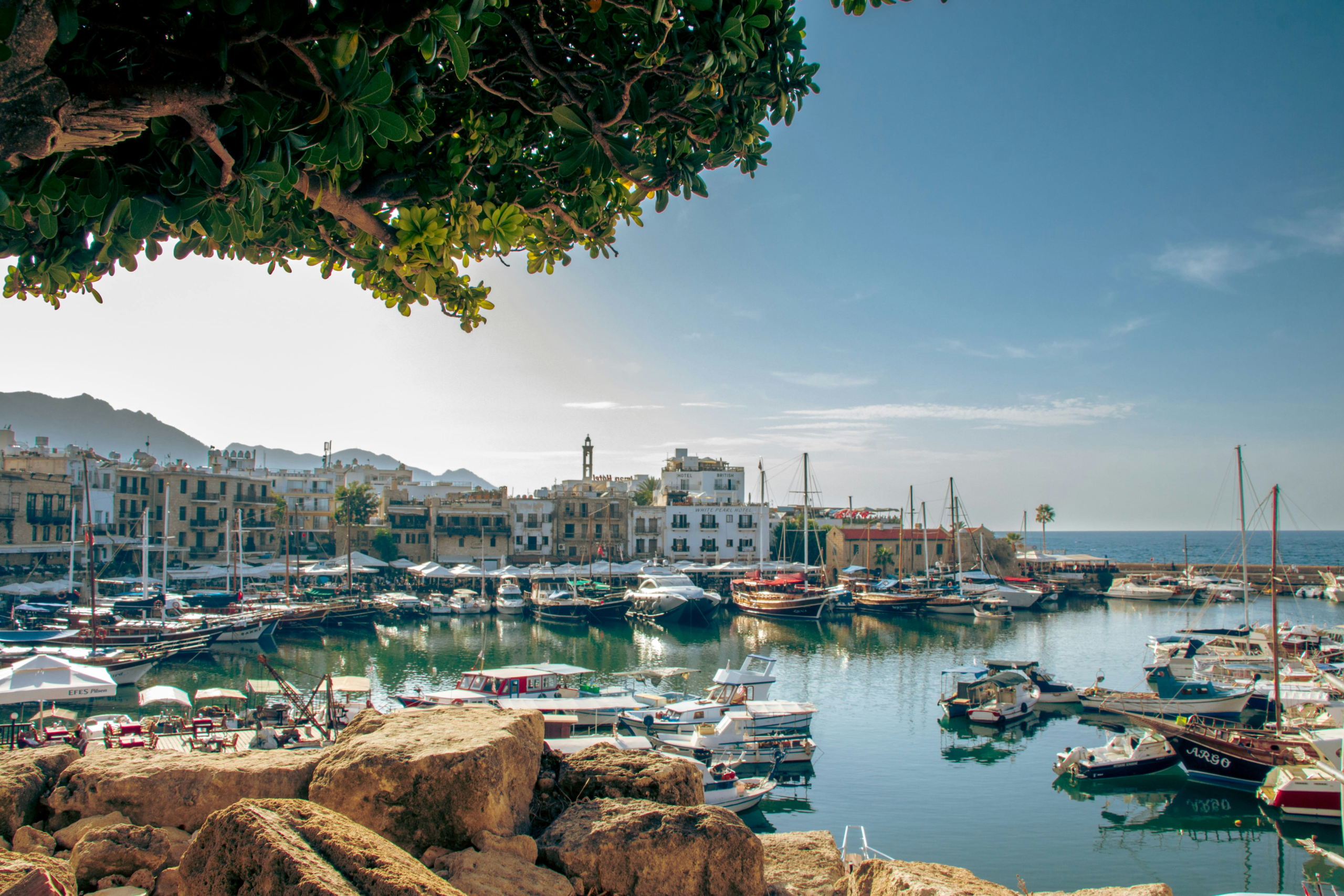
“In the scriptures there’s a clear connection between Cyprus, Jerusalem, and Antioch and it has to do with the birth of the missions movement from Acts 13,” Michael Kerem explains. “It’s also the place where we first have a one new man fellowship, Jew and Gentile together.”
Today Cyprus is a key gathering place where Jews, Arabs, and others from all over the Middle East can meet, and there are great stories of the ongoing call of Cyprus as part of the Isaiah 19 Highway.
BARNABAS AS A PROTOTYPE OF THE CYPRIOT CALLING
“Barnabas, along with some of those disciples that end up in Antioch, originally came from Cyprus. So Cyprus has a huge connection with the development of the church in Antioch, eventually releasing Paul and Barnabas on their first apostolic journey. Antioch then becomes the birthplace of missions,” says Michael.
“Now those who were scattered because of the persecution that arose over Stephen traveled as far as Phoenicia and Cyprus and Antioch, speaking the word to no one except Jews. But there were some of them, men of Cyprus and Cyrene, who on coming to Antioch spoke to the Hellenists also, preaching the Lord Jesus. And the hand of the Lord was with them, and a great number who believed turned to the Lord.” (Acts 11:19-21)
When the Greeks started coming to the Lord in the first century, the disciples sent Barnabas to check it all out. Barnabas went to get Saul, who then went to Antioch to help and to teach the new believers there. “But remember,” says Michael, “those Cypriot disciples of Jesus ended up in Antioch because of the persecution generated by Saul. So when they see him for the first time after he cast his vote for the stoning of their friends, clearly reconciliation had to take place.”
Barnabas managed to convince the disciples in Antioch that Saul is really a believer when no one believed him. But Barnabas believed in Saul. “That’s kind of a Cypriot thing,” Michael continues, building a picture of the Cypriot contribution to the kingdom.
“He’s also the man who first sells all his property and lays it at the apostles’ feet. So there’s also the aspect of generosity… Cyprus is basically a sending place, a refuge place, and a key kingdom spot,” he adds.
Jerry Mattix, a friend and partner with Derech Avraham, now lives and serves in North Cyprus on the Turkish side with his wife and family. Jerry refers to the biblical Barnabas as a “missionary statesman” on account of his upright and noble character, lifting up and encouraging others.
Indeed the character of Barnabas in many ways represents the calling of the nation.
In his documentary about Cyprus (below) Jerry explains that Barnabas served for many years on the island, encouraging and strengthening the church, but that he was stoned to death in the end by a Jewish mob that rose up against the believers.
“Barnabas became the patron saint of the church in Cyprus and is very, very highly revered in this island to this day,” says Jerry.
FIRST CENTURY ENCOUNTER IN CYPRUS
The first ever missionary journey initiated without persecution was sent from Antioch to Cyprus led to an important encounter with Paul’s namesake:
“While they were worshiping the Lord and fasting, the Holy Spirit said, “Set apart for me Barnabas and Saul for the work to which I have called them.” Then after fasting and praying they laid their hands on them and sent them off.
So, being sent out by the Holy Spirit, they went down to Seleucia, and from there they sailed to Cyprus.
When they arrived at Salamis, they proclaimed the word of God in the synagogues of the Jews. And they had John to assist them. When they had gone through the whole island as far as Paphos, they came upon a certain magician, a Jewish false prophet named Bar-Jesus. He was with the proconsul, Sergius Paulus, a man of intelligence, who summoned Barnabas and Saul and sought to hear the word of God.” (Acts 13:2-7)
But Elymas the magician (for that is the meaning of his name) opposed them, seeking to turn the proconsul away from the faith. But Saul, who was also called Paul, filled with the Holy Spirit, looked intently at him and said, “You son of the devil, you enemy of all righteousness, full of all deceit and villainy, will you not stop making crooked the straight paths of the Lord? And now, behold, the hand of the Lord is upon you, and you will be blind and unable to see the sun for a time.”
“Immediately mist and darkness fell upon him, and he went about seeking people to lead him by the hand. Then the proconsul believed, when he saw what had occurred, for he was astonished at the teaching of the Lord.” (Acts 13:8-12)
After that confrontation, the magician goes blind, but the Cyprian proconsul, Sergius Paulus, has his eyes opened.
Interestingly enough, Jerry points out that Saul leaves the island a changed man and changed his name to Paul (Paulus in Hebrew), quite possibly after the proconsul Sergius Paulus.
“Paulus is a Latin name meaning ‘small’ By taking on a Gentile name Paul seems to be embracing his new role as Christ’s ambassador to the nation,” he explains.
EYES OF THE MIDDLE EAST
The whole issue of eyesight is also connected with the Isaiah 19 calling of Cyprus. The reason it is included at all in that prophecy is that the island was at one point part of the sprawling Assyrian empire, but it has served as a naval asset to various empires and a strategic look out point for millennia.
It is something of a neutral place from which to observe the Middle East region, and there are people from many different nations and languages living on the island. Even now it is known as a place where intelligence officials from different countries often gather to meet and share information.
Another Isaiah 19 traveler once described Cyprus as the “eyes of the Middle East,” adding that this can include spiritual sight and understanding.
Today many come from all over the region to the island to learn, to gain understanding, and for discipleship training, something that Jerry has been involved with for years.

A LIGHTHOUSE, A SAFE PLACE AND A REFUGE
Two key projects happening in Cyprus are a Middle East School of Discipleships (the Barnabas Training Program) and the At-Risk Woman’s Ministry, helping women escaping from danger in the Middle East to get settled, educated, and established in a new life.
The Barnabas Training Program is an intensive discipleship program that brings Muslim background believers who wouldn’t otherwise be able to get to a Bible school together with fellow believers from around the region for worship, fellowship, and biblical training in a type of One New Man Bible school.
There is also an online school operating in Turkish as part of the Barnabas Discipleship Program with classes twice a week. The program has been in very high demand, with more than twice the number of people applying than there are places available.
The second project — the at-risk women’s center — is run by Jerry and his team. There are many women who fled from Iran, as well as Yezidis from Iraq, about a dozen from Afghanistan, and more from other central Asian locations. Many arrive as Muslims or non-believers but all the women have plenty of opportunities to hear the Gospel. Many have come to faith.
The women are provided with scholarships to Cyprus International University so they can establish themselves independently. Most recently a Yezidi woman graduated with an MA in pharmaceutical studies and is starting her new life in Europe. Jerry reports on some of the latest developments at the center:
“The last of the Yezidi ladies is leaving the island even as another Iranian girl arrives. Fadia has been in Cyprus for 8 years now. After graduating she found a job at a local hospital. Last year she got engaged and is on her way to the Netherlands soon. Another young lady who graduated last year, Faroo, has finally managed to make it to Germany where she had a job lined up… We are so grateful she is now in the good company of believers in Germany who are helping her get set up. It is also a great inspiration to the other ladies, several of which will be graduating this summer and are looking to find a way forward.”

ONE NEW MAN ISLAND
Just as Acts 11 was a sort of “second Pentecost,” we see a similar outcome after the second outpouring. In Acts 2 there was a sudden sending of the Jewish disciples from Jerusalem, and the Gospel went far and wide in the power of the Holy Spirit. Later in Acts 10 and 11 we see in the parallel story of Peter and Cornelius the Spirit poured out on Gentiles, resulting in much the same thing.
“So, being sent out by the Holy Spirit, they went down to Seleucia, and from there they sailed to Cyprus…” (Acts 13:4)
“Cyprus has a huge role in the church moving from just being Jewish to being one new man, a Jewish-Gentile movement,” concludes Michael. It’s a role Cyprus still fulfils to this day.
Comparing Cyprus to a busy train station, Jerry says that Cyprus is a “catalytic island,” where people can receive the gospel, be transformed, and take it elsewhere.
He points out that the island is “strategically located, right in the middle of the world,” in the Middle East, surrounded by several continents. Jerry’s prayer is that God would make Cyprus a deep well for the benefit of the nations, saying “from here, we can reach a cross section of people from all over the world.”
April 2026