Exactly a year ago, we wrote to ask for prayer for northeast Syria, for the Kurdish enclave of Rojava (also known as the Autonomous Administration of North East Syria, AANES). There’s some good news and some bad news, but much more to pray about.
With al-Jolani’s rise to power we asked you to pray that there would be no spillover of violence to Jordan, no Turkish invasion into Syria, and no attempt to attack the Israeli Golan. While none of these things happened, praise God (that’s the good news), it’s with extreme sorrow that we have watched the news that AANES, until recently a safe haven for Christians and Muslim background believers (mbbs), has just been overrun by the troops of ex-al Qaeda President al-Jolani and his “transitional government.”
Syria: The “new Syrian Army.”
Al-Qaeda and ISIS fighters in uniform.
Funded by the EU.
Partners with the USA.
Pray for the Christians and minorities of Syria. pic.twitter.com/dQ61CctztS
— Christian Emergency Alliance (@ChristianEmerg1) January 24, 2026
The takeover seems to have been given US approval, as US troops right there on the ground were not permitted to intervene. Why?
Initially Kurdish families, amongst whom were Kurdish mbbs, had taken refuge in two neighbourhoods in Aleppo. Last week they were attacked by government forces. Many fled to the Northeast and the AANES and as a result, Kurds have been pushed back and effectively made captives in their remaining cities. Kurdish women have been raped and murdered, some been thrown off buildings for not wearing the hijab, and hundreds, if not thousands, of ISIS prisoners have been let loose from detainee camps in the Kurdish area of Rojava (the AANES). All this has happened since last Friday.
For over a decade, the AANES region of Rojava has been a haven of democracy where minorities are protected and even Muslim background believers can worship freely. As our friend and partner, Charmaine Hedding, has said:
“The one part of Syria that is democratic and has values like we have: freedom of religion and belief, inclusion for women, participation of all religious minorities… It’s from there that the US bases have been able to form the coalition forces. They joined up with North Eastern Syria to fight ISIS. These are the people we should be actively supporting, not these Jihadist groups.“
However, it appears the US administration has not listened to this advice. Tom Barrak, US Ambassador to Turkey and envoy for Syria, announced a “pivot” in US policy, saying that they had effectively chosen to withdraw support from the primarily Kurdish Syrian Democratic Forces (SDF) over to the Hay’at Tahrir al-Sham forces (HTS) under al-Jolani. The US is now working with al-Jolani to fully integrate the autonomous area of Rojava into Syria to be under his control, giving them the green light to conquer the region.
Previously, the Kurds of Rojava were allied with the West (along with many moderate muslims in the country and Assyrian Christians) in the battle against ISIS, ultimately helping them gain victory. The Kurdish AANES region was not constitutionally recognized as being an autonomous sub-state, (as is the case with Kurdistan in Iraq) but the hope was that negotiations between the SDF and HTS would yield a reasonable balance of power and autonomy.
Sadly, after the Kurds had agreed to cede territory in exchange for key positions in the army and protected rights — a deal negotiated with the help of the US — there was a totally unexpected and multi-faceted military onslaught from Jolani’s troops which resulted in almost all of the area being taken over. Worse, all the moderate Arabs who had joined with the Kurds fighting against ISIS suddenly switched sides and obeyed orders from al-Jolani, turning on their former allies. The Kurds were caught completely unprepared and were hopelessly overwhelmed. As a result, 15 years of hard work has been lost in Syria, as the map now looks eerily similar to the state it was in back when ISIS was in town.
IT MIGHT NOT BE SO SURPRISING GIVEN THE FOLLOWING FACTS:
1) It must be remembered who al-Jolani is, and his ISIS connections. Al-Jolani (or al Sharaa as he may now prefer to call himself, to erase the hint of his domination enterprises over Israel’s Golan region) has roots in al Qaeda and links with ISIS. After fighting with Al Qaeda in Iraq, he went on to become the founder and commander of Al Nusra (Al Qaeda in Syria) which subsequently joined with other groups to become Hay’at Tahrir al-Sham (HTS). Though HTS has its differences with ISIS on several fronts, they have a shared hate of infidels such as Kurds, Yazidis, Alawites, Jews and Christians, and will cooperate to fight them together. Some of the men fighting with al-Jolani are members of ISIS. This makes the US decision to “pivot” all the more puzzling, given that their justification was to have a thorough defense against ISIS.
2) Turkey is at work. Lurking behind the scenes, Erdogan and his hatred of the Kurds is driving much of what we see in Syria today. Former Turkish MP Rasul Tosun has boasted as much publicly. With Jolani’s tailored suit and smooth words to the west promising democracy and cooperation, together with the subtle power plays and bully tactics on the ground, the former terrorist has learned many of his moves from Erdogan. Respectable diplomacy with the West, and the constant threat of military brute force in the East, he knows how to get what he wants and hold it. Erdogan, who has a historical vendetta against the Kurds is of course behind a lot of the negotiations.
Former Turkish MP Rasul Tosun: Turkey Played a Pivotal Role in the Syrian Government’s Victory Over the SDF by Preventing U.S. and Israeli Intervention on Behalf of the Kurds; “The Turkish Sword Was Hanging Over the SDF’s Necks” pic.twitter.com/aWmhaXKzZJ
— MEMRI (@MEMRIReports) January 22, 2026
Now Syrian government officials have explained that the US decided to switch their support to al-Jolani with the expectation that Syria will join the peace treaty with Israel in return. “Both the US and Israel realize that the era of dealing with Syria’s minorities is over,” the official said, according to ALL ISRAEL NEWS.
3) The Kurds are on their own. As the traditional Kurdish saying goes, they have “no friends but the mountains.” Facing the forces of Tahrir al-Sham from the south and with Turkey bearing down on them from the north, the Kurds are badly outnumbered. They have no allies to turn to, and the US has clearly put an end to their support.
There are other minority groups in Syria, such as the Druze, Alawites, Christians, Yazidis, and others, but HTS has been targeting and massacring them with extreme cruelty as well. As a result these minority groups are diminished and in no place to fight back. The Druze refuse to surrender in the south of Syria, only because they are being protected by Israel. Israel is not coming to the Kurds’ defence because they are currently beholden to Trump, with peace negotiations still hanging in the balance. And the US won’t help the Kurds anymore either, since Trump seems determined to make a peace deal that Syria will capitulate to. Kurds have been seen streaming over from Iraq and Turkey to help, but they are likely no match for what is waiting for them there.
… BUT GOD
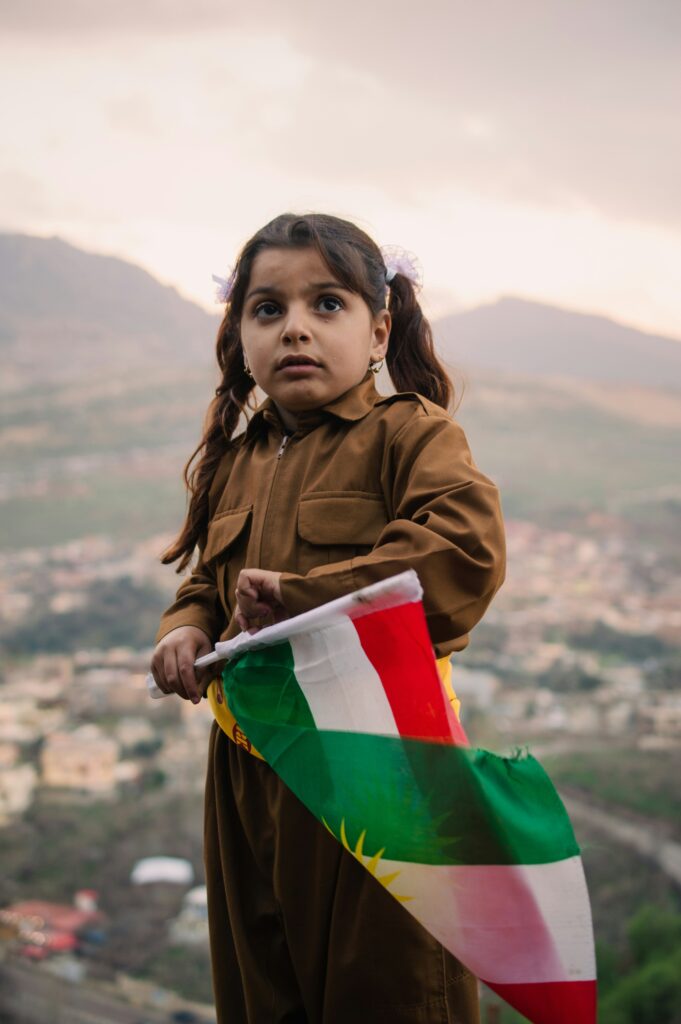
While the Kurds may reasonably feel they have “no friends but the mountains,” we want to stand in solidarity with them in this dire situation, to pray and to help. Especially with so many Christians and Muslim background believers in the area.
One of our ministry partnerships is with the Shai Fund which was founded by Charmaine Hedding to give practical support to those affected by war, conflict, disaster, persecution, and exploitation. The Shai Fund has been partnering with local communities in Syria over the last 20 years to provide urgent aid and humanitarian assistance for Kurds, Christians and other minorities such as the Yazidis and Druze. If you would like to practically send help at this time of crisis for the Kurds, the Shai Fund is a great way to take your contribution where it’s most needed.
“Kurds are being hunted down in the conquered areas. The situation is particularly dramatic in… Kobanê, which resisted the ”Islamic State” in 2014. It was from there that the liberation of the region from IS began,” explained Dr. Kamal Sido, Middle East expert at the Society for Threatened Peoples (GfbV). “The water and electricity supply has been cut off. Internet access has also been blocked. The radical Islamists are advancing further and further. The deliberate interruption of basic services is creating a humanitarian crisis. Civilians, including children and the elderly, are trapped in darkness and have no access to basic services.” He continued, “apparently, the Syrian regime wants to take revenge on Kobanê because the city is a symbol of the fight against IS. For the Kurds – and for the world – Kobanê is a symbol of hope and resistance against radical Islam,” said Sido.
Several churches that are part of the Derech Avraham alliance of ministries have been very involved in relief work during the time of ISIS, taking large quantities of aid over the borders of Syria into Rojava to support people there. We can enable funds sent to our practical initiatives to reach churches who are ministering to Kurdish Syrians on the ground.
PRAYER POINTS
▫️Let us pray that God would bring forth an alliance of nations (similar to that of the Abrahamic Accords) that would apply pressure on the Al Jolani government and then work with the new government in Syria to guarantee equal rights for minorities, that the Gospel could be freely preached and believers protected under the law.
▫️Pray for government leaders in the US, Western Europe, and in Israel to boldly stand with the Kurds and other minorities in Syria at this time.
▫️Pray for those laboring for the Gospel and providing needed humanitarian relief in North East Syria, that even in the midst of the crisis the Gospel will go forth.
▫️Pray for the Kurdish people throughout the region to put their hope in the God of Israel.
▫️Pray into God’s promise of the Highway that will be built, including this very important nation, a promise that will bless the whole Earth! (Isaiah 19.23-25)