
Events in Southern Syria have rapidly spun out of control. Hundreds have been terrorized and slaughtered. The Druze are a minority group in Syria the majority of whom live in the city and province of As-Suweida where the violence has been taking place. Some of our ministry partners have been on the ground, serving in different capacities, and have reported what they have seen and heard.
News reports gave conflicting accounts about who was responsible for the violence, but as the dust settled it seems approximately a thousand Druze (including Christian residents) of As-Sweida have been killed by Sunni Muslims and Bedouins who have been sent to “exterminate” the Druze, who are seen as infidels by the Sunnis, as well as many others coming from the Regime in Damascus itself. According to AFP News, a Bedouin leader told his fighters, “We will slaughter them in their homes.”
An aspect that is largely hidden from the world is the fact that there are at least two congregations of believers who came to faith in Jesus from a Druze background. Many have been scattered and the entire family of one pastor was killed in cold blood.
A pastor and his wife who are friends and ministry partners of Derech Avraham have been serving in Syria, witnessed with their own eyes the horrors taking place.
“Genocides have been happening in Syria far from the media coverage, starting with the Alawites in the coastal area and presently with the Druze in Sweyda, many people have been killed, burned alive, girls are raped, and many Druze leaders have been dishonored,” they relayed. “One of the practices for dishonoring is by shaving the mustaches of the Druze Sheikhs, humiliating them publicly, mocking them, laughing at them and killing them after that.”
Footage of these atrocities and the public humiliation of Druze elders has flooded social networks. “There have been calls for jihad in many places and Jihadist militants from all over Syria are flowing towards Suweida to settle scores with the Druze.”
It seems a video clip that has offended the radical Islamic elements in the new regime under al-Sharaa had been circulating from the Druze community, but as many have been warning for some time, this new government is merely a collection of jihadis and it was just a matter of time before those considered “infidels” would be attacked.
“Christians have not been spared and many have been killed, churches burned and mass exodus is happening now. Some [are] fleeing to Jaramana [a suburb south of Damascus] and some to Lebanon… Today the whole province of As-Sweida is left without water, without food, without electricity or medicine,” they added.
Israel also has a significant Druze population, many of whom serve in the IDF, who have demanded Israel take action to protect their fellow Druze brothers across the border. Thousands of Israeli Druze gathered in solidarity at the border community of Majdal Shams in the Golan Heights and then broke through the fence. They rushed across the border, determined to save their cousins and extended family on the other side. Israel’s military also unleashed airstrikes on the new Syrian regime forces and then on the presidential palace in Damascus. On Sunday Israel then sent medical equipment and medicine to a hospital in Sweida, after days of violence. Many are now asking if the supposed cease-fire orchestrated by the U.S. will actually hold. Meanwhile, the possibility of Turkey’s further involvement looms, following their actions supporting the new regime and ousting Assad.
Like Kamal Sido of the Society for Threatened Peoples (STP), Charmaine Hedding, president of the Shai Fund and partner with Derech Avraham, points to the multiple atrocities committed against all of Syria’s minorities: Alwaites, Druze, Kurds, Christians, and others.
Terror attack at Damascus church
“The bombing at Mar Elias Church in Damascus, Syria, on June 22 was not an isolated incident,” Hedding warned. “It was the latest and most visible act in a broader campaign of targeted violence and systemic marginalization against Syria’s Christian community and other religious components. The attack, which tore through a sanctuary during a memorial service, killing and wounding members of a mourning community, underscores a grim reality: in Syria today, the very presence of diverse religious traditions is under threat.”
She continues, “The attack also marks a new phase in the violence against Christians. Three hundred worshippers were gathered at Saint Elias Church for a memorial service when a terrorist walked in with a grenade and a suicide belt. Two brothers, Gergis and Boutros Bechara, acted immediately and tackled the attacker as he exploded — sacrificing their lives to save others. Over 25 Christians were killed and more than 60 were injured.”
The pastor and his wife went to visit the church where the blast happened. “The smell of chlorine was filling the atmosphere as people are trying to remove the stench of death. Every wall is marked, the ceiling has fallen, and the paintings are full of holes,” they told us.
“We learned that the suicide bomber had two back packs on him filled with screws and nail to do as much harm as possible to the biggest number of people possible. Honestly, many people were saved by the heroic acts of these men. They truly laid down their lives for others.”
“We visited the mother of two of those men. She was at the church at the time of the blast. Her leg is still shredded, and she lost her hearing because of the blast. We saw her laying in bed devastated not only by her loss but also by her inability to grieve. We saw the sister of one of the men, who has wraps all over her body and shrapnel’s still on her. We met the wife of one of the heroes. In an instant she became a widow and her kids became orphans. The body of her husband is completely disintegrated as a result of the blast.”
“What could we say, how could we offer condolences. The only thing we could do is cry with them and offer a prayer asking the comforter to come near them.”
“My only request now is to pray, pray, pray. Our brothers and sisters need to know they are not alone and that they are not forgotten!!”
Syria is rapidly changing. Those coming from Lebanon have found that rules regarding crossing the border are constantly in flux. For now Syrian Druze are not permitted to flee to Lebanon, where there is also a Druze community, for fear that the killing would follow them. Crossing the other way is possible but unpredictable.
“Every day rules change, the list of those allowed into Syria are updated and visa fees differ from one day to another. For the first time we had to pay for a visa going inside Syria,” the pastor and his wife reported.
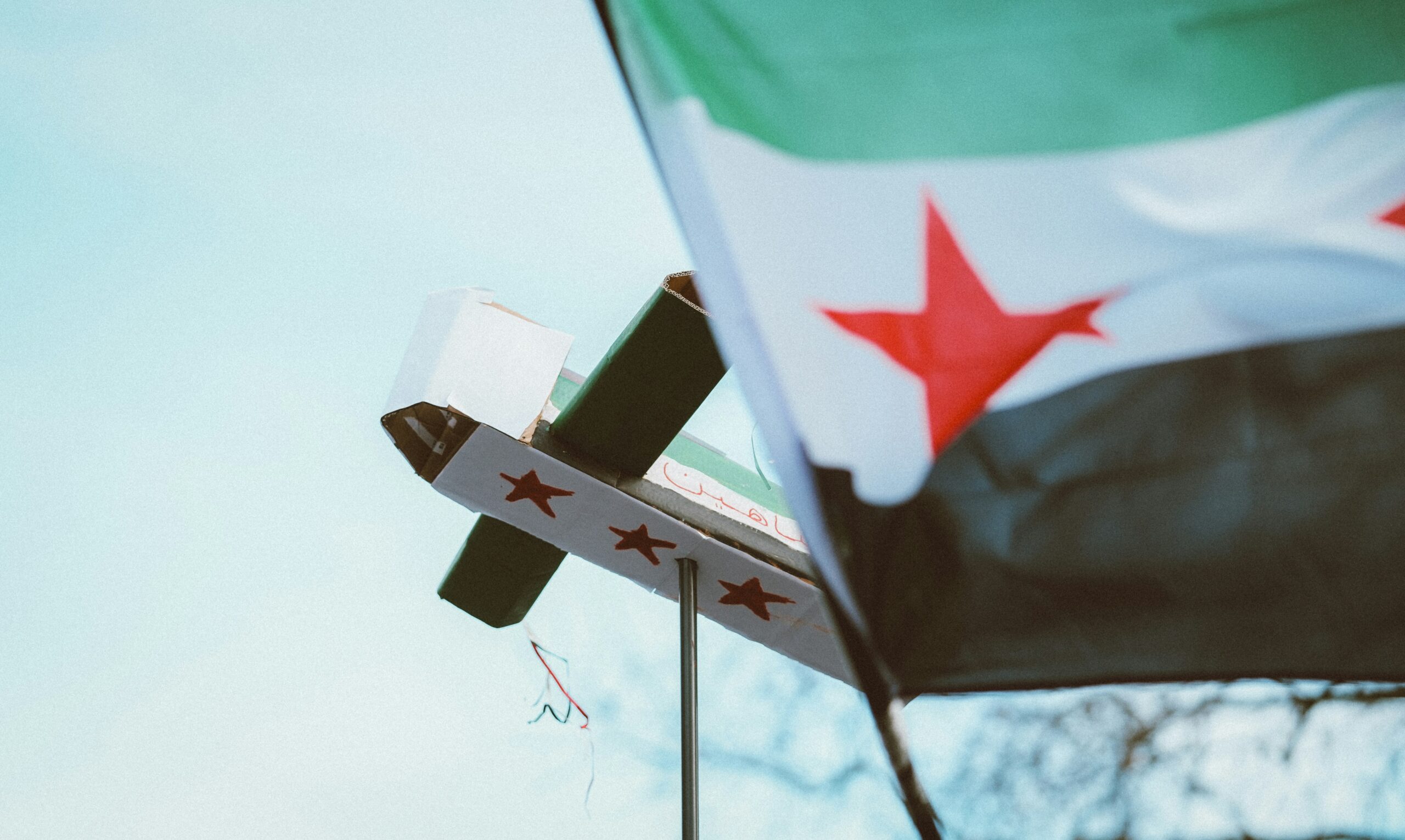
“The first thing that jumps to our eyes as we approach the border is the changed flag. The red stripe became green, and a star is added to the flag. And it is displayed everywhere,” they said. They noticed many more guards at checkpoints, noticing that, “All of them are dressed in black and have a new look with long beards… I learned later that this is a way to show they are following the Sunna of their prophet who was believed to have a long beard. The new people responsible for security are coming from the north of Syria where the HTS ruled for a long time with a very radical Islamic belief.”
President al Sharaa may be making deals with Trump and saying that he condemns the massacres, but the reality is there is no peace and the people, by and large, have lost hope for a positive change. According to witnesses there, street protests broke out in Jaramana and in Damascus with people taking down the flag of Syria and calling for the new leader to step down.
Here are some of the developments for understanding and prayer about the situation:
• Many are living in fear of becoming the next target because of sectarian tensions.
• People can only withdraw $10 at a time, and have to wait 2-3 hours to do so.
• Many have lost their jobs and been replaced.
• Travel is restricted, with permission being required even for governors to travel to another area.
• Conservative clothing is now being expected and adhered to.
• There has been many kidnappings asking for ransom
• ”Morality police” style checks are being made on women out in public with men.
• Reports of people killed or raped are not getting out to the media
• On the coast in the Latakia Governorate about 1000 Alawites have been killed and the girls are taken for forced marriage.
• In Christian quarters cars are driving with loud speakers calling Christians to either leave the country or convert to Islam.
“Mar Elias was more than a church,” explains Charmaine Hedding. “It was a symbol of Syria’s ancient Christian presence and of the broader mosaic that defines the country. The attack is a warning. If we continue down a path where governance is dictated by those with a track record of violence and exclusion, the very idea of Syria as a home for many peoples will vanish.”
She insists, “Religious freedom in Syria must mean more than the absence of persecution. It must mean full rights, full citizenship, and full participation in public life for every component of Syrian society. This includes the right to run for office, to educate children in one’s language and faith tradition, to manage community affairs without interference, and to live and worship without fear. The people of Syria’s ancient communities do not want “protection” from others — they want to take part in shaping their own future, on equal footing with everyone else.”
PRAYER POINTS
▫️Pray that the believers in Syria be bold enough to stand firm in the midst of persecution. Pray that they would experience the presence of God in tangible ways through divine interventions and the miracles of his amazing love.
▫️ Revenge attacks are very common as we live in a world of shame and honor here in the Middle East. Pray that leaders of both sides will choose a better way and that the (Islamic) government will take seriously its promise to protect minorities.
▫️That Israel will stand strong in its pledge to protect minorities in Syria. This includes Christians, Kurds, Alawaites and Druze among others. This is the first time Israel has openly stood with minorities probably since aligning with the Christians in Lebanon back in the day. Pray that they stay the course.
▫️There are at least 2 Druze fellowships of followers of Jesus in As-Sweida. These are fairly prominent with nearly 200 believers in one of them. Pray for that they would be a light in darkness and for their supernatural protection. Pray for the extended family of Pastor Khaled who was murdered along with 21 members of his family and congregation.
▫️Pray for restoration for the communities decimated by violence and for a strong stand by the international community on behalf of Christians and other Minorities in Syria before it’s too late.
▫️God has a destiny in His Highway Promise for the peoples of Syria. Pray the enemy will not be successful in his desire to kill, steal and destroy in Syria, but that God will bring them life, through the power of the Gospel (John 10.10).
“But this is a people robbed and plundered; they are all of them snared in holes and hidden in houses of bondage. They have become a prey, with no one to deliver them, a spoil, with no one to say, “Restore them!”” (Isaiah 42:22)